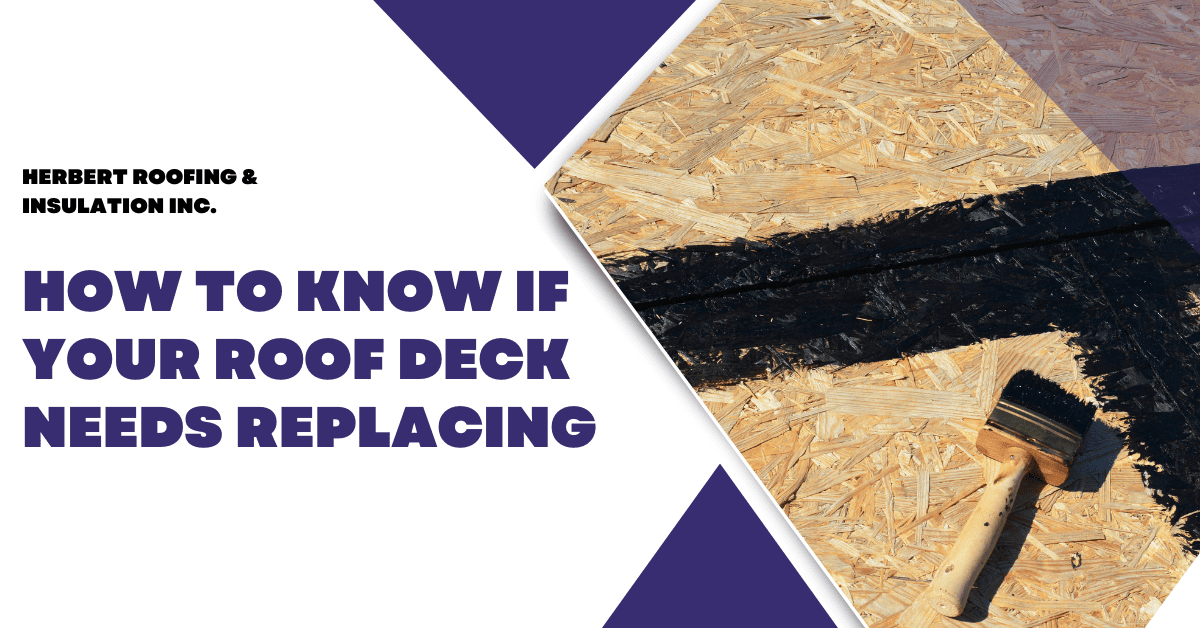
If you live in a home that was built before the 1980s, there’s a good chance it has a roof deck. A roof deck is essentially the ceiling of your attic, and it’s made of plywood or other types of lumber. Roof decks can be damaged by age or water damage due to leaks in the roof above them. When this happens, you’ll see signs like rot or mold on the surface of your ceiling. If you don’t address these issues quickly, they’ll get worse over time and eventually require replacement. Plus, doing so can help prevent further damage from occurring beyond just this one area of your home! In today’s post, we’ll look at how to tell if your roof deck needs replacement and who can help with this project:
What does a damaged roof deck look like?
You can tell if your roof deck is damaged if you see discoloration or cracks in the wood. Damage to the roof deck is caused by water leaks, so if you have a leaky roof, consider repairing it before replacing the entire deck. If you’ve had a lot of rain lately and notice there are wet spots on your ceiling or walls, this could be a sign of water damage to your deck.
Another sign that your roof deck needs replacement is bowing or bulging due to roof rot.
How often should I check my roof deck for damage?
While inspecting your roof deck may seem like a good idea. Removing shingles to look at the decking is not a regular home maintenance practice. If you are about to sell your home or purchase a new one and want to make sure its roof will boost its value, then checking out the deck may be something worth doing. In some cases, you could save money by not having to replace all the damaged materials if there are only small cracks or holes in them.
When you do decide to tear off a handful of your shingles, here’s what we recommend:
- Use caution – Use caution when removing damaged shingles so they don’t fall on anyone or anything below. Keep in mind these pieces may be coated in asbestos, so make sure to wear a mask and wear gloves.
- Round up all the pieces – Keep all removed parts together with tape so nothing gets lost during clean up, especially if there were hazardous materials involved.
Why should I be diligent about fixing roof rot?
If you’ve noticed any of the signs above, it’s time to consider replacing your roof deck. Roof decks are important because they provide structural support for the rest of your house. They also shield your home from moisture and direct water away from critical areas like ceilings and insulation.
If your roof deck is exposed to excess moisture too frequently, it may decay or develop wood rot. This can lead to problems with insulation and roof leaks. Thus, resulting in an expensive repair bill later down the road.
Who should I contact to help with roof deck replacement?
Contact us today if you need help with roof deck replacement. Our skilled team is waiting to assist you with any roofing needs, including other services like roof repairs and maintenance. Call us today at (989) 447-2915 or fill out our online contact form to request a free quote.
Measurement:
Accurate measurements are critical. For asphalt shingle roofs, you divide the total surface area by 100 to get “roofing squares” (one square = 100 sq ft) when calculating materials and labor. GAF Many roofing contractors now use tools such as satellite imagery and specialized apps to measure quickly. GAF
Choosing Materials and Contractor
Question: Which shingles and which local roofing company should I pick?
Materials:
- Asphalt shingles are the dominant choice for residential roofing across the U.S. and Michigan, because they cost less and are easier to install. GAF
- Brand matters. For instance, GAF is North America’s largest roofing manufacturer and certifies certain contractors to give stronger warranties. GAF
- If you’re selecting between brands like GAF or CertainTeed, check their warranty options and whether the contractor is “Factory-Certified”.
Contractor:
- Choose a local roofing company experienced with Michigan weather (snow loads, ice dams, proper ventilation for cold climates).
- Ensure they are licensed, insured, and can provide roofing system warranties, not just material warranties.
- Ask for references, check local reviews, and verify they are comfortable working with permits in areas such as Saginaw, Midland, Bay City, Traverse City, and Harbor Springs.
|
Shingle Tier
|
Typical Lifespan*
|
Pros |
Cons |
|
Basic 3-tab asphalt
|
~20–25 years
|
Lower cost
|
Less durability, fewer style options
|
|
Architectural (dimensional) asphalt
|
~25–30 years or more
|
Better durability, looks better
|
Higher upfront cost
|
|
Premium asphalt / enhanced warranties
|
30+ years *if well maintained
|
Longest asphalt option
|
Highest cost of asphalt category
|
*Life spans vary heavily by climate, installation, and maintenance.
Pro vs. Con: Hiring a Certified Contractor
Pros
- Certified teams can offer stronger warranties
- Better trained in proper roof system installation
- More likely to understand local Michigan code & climate issues
Cons
- Generally, a higher upfront cost
- Might require more lead time (busy season)
Budgeting & Financing
Question: How much will this cost, and how can I afford it?
As of 2023, the average cost of replacing an asphalt shingle roof in the U.S. is about $14,959. GAF Keep in mind this average includes many regions and sizes; your cost in Michigan may vary due to local labor, permit costs, disposal of old materials, snow-load requirements, etc.
Factors that influence cost:
- Size and pitch of your roof
- Complexity (dormers, hips, valleys)
- Materials chosen (basic vs premium)
- Local building codes and permit fees
- Removal of old roof vs overlay
- Ventilation improvements, attic insulation
- Warranty type and contractor certification
Financing Options
Many local roofing companies (including Herbert Roofing) offer roof financing (monthly payments) or help you apply for home-improvement loans. Also, replacing your roof now may save on future repair costs (which would be more costly if damage occurs before replacement).
Scheduling and Pre-Installation Preparation
Question: What should I expect before installation day?
Once you’ve selected your contractor and signed a contract, the following steps are:
- Schedule the replacement; peak roofing season in Michigan is often late spring through early fall (avoid deep winter if possible).
- Permits & inspections: Your contractor should handle the local permit process for your city (Saginaw, Midland, etc.).
- Material delivery: Shingles, underlayment, and flashing materials will arrive before installation.
- Prepare your property:
- Remove vehicles from the driveway if roofers need access.
- Clear valuables (sensitive electronics) from the attic in case of vibrations.
- Board up or protect landscaping near the house (shingle nails can scatter).
- Old roof removal plan: If your roof has two or more layers of shingles, local Michigan codes may require a full tear-off.
- Weather contingency plan: Since Michigan weather can change rapidly, agree with your roofer on a backup date or plan in case of rain or snow.
Installation Day
Question: What happens on the actual replacement day?
Here’s a typical flow:
- Tear Off: Removal of existing shingles (and possibly underlayment) down to the roof deck.
- Deck inspection/repairs: Any damaged decking will be replaced.
- Install underlayment & ice-dam barrier: Critical in Michigan’s climate, where snow/ice melt can freeze at eaves.
- Flashing & ventilation work: Install or upgrade flashing around chimneys, vents, and valleys. Proper attic ventilation is key to shingle longevity.
- Shingle installation: Lay the chosen asphalt shingles (GAF, CertainTeed) per manufacturer’s specifications.
- Cleanup & disposal: Contractor should haul off old materials and leave the site tidy; nail sweep or magnet to clear stray nails.
- Final inspection & homeowner walkthrough: You’ll have the chance to review the roof and ask questions.
Post-Installation Inspection & Warranty Registration
Question: What should I do after the roof is installed?
- Walk the roof perimeter with your contractor (from ground level) for final review.
- Request all warranty documentation (manufacturer and workmanship).
- Register your warranty with the manufacturer (often the contractor does this on your behalf). Manufacturers like GAF highlight this as part of a proper system installation. GAF
- Take photos of the new roof for insurance records.
- Review maintenance instructions: cleaning gutters, trimming overhanging branches, and checking attic ventilation.
Maintenance Plan & Longevity
Question: How do I ensure my new roof lasts as long as possible?
In Michigan’s climate, longevity is enhanced by:
- Scheduling annual roof inspections (especially after winter or major storms).
- Cleaning debris (leaves, branches) off roofs and in gutters.
- Maintaining attic ventilation and insulation (to prevent ice dams and excessive heat).
- Watching for moss or algae and addressing quickly — they can shorten shingle life.
- According to This Old House, climate and maintenance are significant factors in lifespan variation. This Old House
- Respect the warranty conditions (for example, some warranties require certified installation, restrict walking on shingles, or limit colors).
- Consider adding features such as ridge vents or ice-dam barriers if they are not already installed.
How Roof Replacement Works in Michigan’s Climate
When you live in Michigan (snow, freeze/thaw cycles, high winds by the lakeshore), these climate-specific considerations matter:
- Ice dams: Without proper underlayment and ventilation, melting snow refreezes at eaves and forces water under shingles. Use an ice-dam barrier.
- Snow load & steep pitch: Roof pitch affects snow shedding; steep roofs may cost more but shed snow more reliably.
- Wind/snow exposure: Particularly in Bay City, Traverse City, or Harbor Springs near the Great Lakes. Choose shingles rated for higher wind resistance.
- Temperature swings: These cause expansion/contraction, which can reduce shingle life.
- Regional code/permit differences: Roofing requirements may differ by county or municipality; your local roofing company should know.
Undertaking a roof replacement is one of the most significant investments you’ll make for your home, especially in Michigan’s climate. By working with a trusted local roofing company like Herbert Roofing, choosing the right materials (such as GAF or CertainTeed asphalt shingles), and following a transparent process from inspection through maintenance, you’ll protect your home, enhance curb appeal, and improve resale value.
If you’re in Saginaw, Midland, Bay City, Traverse City, Harbor Springs, or nearby Michigan areas and think it may be time for a roof replacement (or want a professional inspection), contact Herbert Roofing today. Let us help you plan a roof that’s built for Michigan and built to last.
Frequently Asked Questions About Roof Replacement in Michigan
1. How do I know if I need a full roof replacement or just repairs?
If your roof only has a few missing or cracked shingles, a quick repair might do the trick. But when you see widespread curling shingles, granules collecting in your gutters, multiple leaks, sagging areas, or sunlight peeking through your attic, it’s usually time for a full roof replacement. In Michigan, where harsh winters and temperature swings take their toll, waiting too long can make the damage worse. According to GAF, these symptoms indicate that a new roof will better protect your home than ongoing patchwork repairs.
2. How long does an asphalt shingle roof typically last in Michigan?
Under normal conditions, asphalt shingle roofs last about 20–30 years. However, Michigan’s freeze-thaw cycles, heavy snow, and moisture can shorten that lifespan. If your roof is nearing 20 years old, it’s smart to schedule an inspection.
3. What brands and warranties should I look for when replacing my roof?
Two of the most trusted roofing brands in the U.S. are GAF and CertainTeed. Both offer multi-layer roofing systems designed for durability and backed by strong manufacturer warranties. The key is hiring a factory-certified contractor, like Herbert Roofing, because certification allows you to qualify for enhanced system warranties that cover not just the materials, but also the workmanship. GAF recommends registering your new roof to ensure the warranty remains active.
4. Can I finance a roof replacement, and what should I budget for?
Yes — most local roofing companies, including Herbert Roofing, offer roof financing options or can help you apply for a home-improvement loan. This makes it easier to spread out payments rather than paying the full amount up front. The average asphalt shingle roof replacement in the U.S. was around $14,959 in 2023 (according to GAF data), but your exact cost will depend on your roof size, materials, and design complexity. A certified contractor can help you customize a quote that fits both your budget and your long-term home goals.
5. What should I expect on installation day, and how can I prepare?
Roof replacement day can be busy, but it’s a smooth process when you plan. The crew will start by tearing off the old shingles and inspecting the deck for damage. Then they’ll install underlayment, flashing, and ice-dam barriers, followed by your new shingles. Before the team arrives, move vehicles out of the driveway, cover or move outdoor items, and protect landscaping from debris. A reputable roofer will handle cleanup, magnet sweep for nails, and a final inspection to ensure everything meets code.


0 Comments